Bars Near MG Road: Rooftop, Restobar and Late Night
Bars near MG Road come in three quite different formats and they are not interchangeable. A rooftop…
Bars near MG Road come in three quite different formats and they are not interchangeable. A rooftop is excellent at seven and quietly pointless at eleven. A late night room is dead at eight and full at midnight. A restobar carries a whole evening but will not deliver a view. This guide compares the formats on noise, food, timing and cost, so you can pick the right one before you leave rather than discovering the mismatch after your group has already sat down and ordered.
Key Takeaways
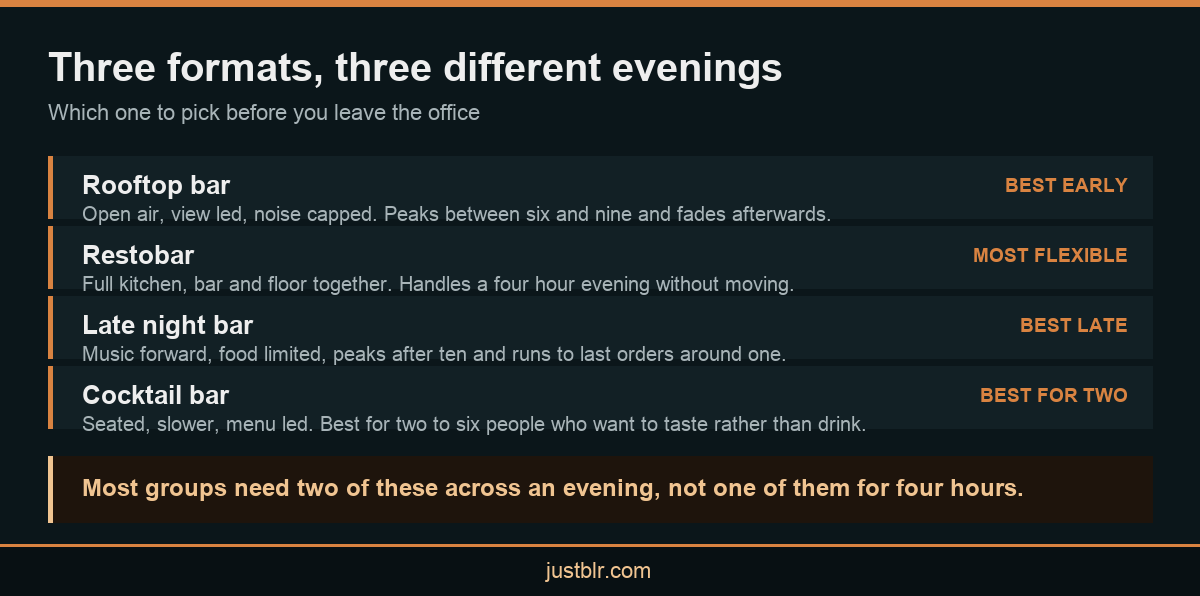
- Rooftops peak between six and nine, restobars carry a full evening, and late night rooms only start working after ten. Format decides timing more than anything else.
- Two stops across an evening is the sensible maximum. Every additional move costs about twenty minutes of reassembling a group and losing a good table.
- Everything worth reaching sits within a short walk of MG Road, so switching format costs minutes rather than a cab fare and an argument.
Rooftop bars and why they are an early evening format
Rooftops are the most photographed format in the area and the most commonly misused. They are genuinely excellent between six and nine, when the light is still going, the air is cooler than the street and the room has not yet had to decide what it wants to be.
The limiting factor is noise. Open air venues operate under caps that indoor rooms do not, which is exactly what makes a rooftop pleasant at seven and exactly what prevents it becoming anything louder at eleven. That is a design constraint rather than a failure of programming.
The practical consequence is that a rooftop is a first stop rather than a destination. Groups who plan an entire evening around one usually find the energy draining out somewhere around ten and end up moving anyway, having lost the good tables downstairs in the meantime.
Weather is the second constraint and it is not trivial in Bengaluru. A rooftop booking in the rainy months is a booking with a condition attached, and the fallback is almost always a room you would have chosen more carefully if you had chosen it first.
Food tends to be lighter than at a full restobar, simply because the kitchen is usually further away from the seating. That works well for a group that ate earlier and less well for one arriving straight from an office with nothing since lunch.
Use a rooftop for what it is genuinely good at. Arrive at half past six, have one round and something to eat, and move before the room starts thinning. Done that way it improves an evening considerably rather than quietly consuming it.
Restobars and why they carry the whole evening
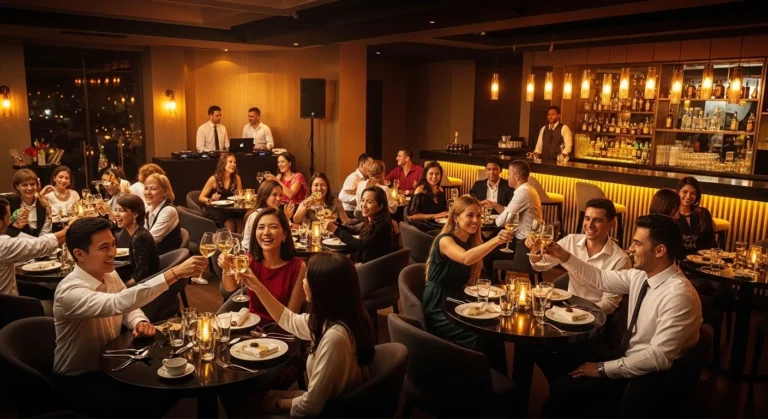
A restobar puts a full kitchen, a proper bar and usually a floor under one roof. That combination is why it is the most forgiving format on the strip and the right default whenever a group has not fully decided what kind of night it wants to have.
The kitchen does more than feed people. It slows the pace of drinking, gives everybody a reason to stay seated past nine, and keeps the room civil for an hour longer than a drinks only bar manages. Groups eat, talk, and then decide about the rest of the night from a much better starting position.
Menu breadth matters more than any single dish once a group passes eight people. One vegetarian, one person avoiding spice and one who wants pasta will defeat a narrow list instantly, and the negotiation that follows takes twenty minutes that nobody enjoys.
Multi floor restobars go further, because they let a group split its mood without splitting its booking. The guide to restobars and bars near MG Road covers what to look for in the layout and how to judge whether the floors actually work independently or simply exist.
Timing is flexible in a way the other two formats are not. A restobar is worth arriving at from about seven and worth staying in until close, which means one booking covers an entire evening without any of the reassembly that moving venues requires.
This is also the format that handles a mixed age group best. Somebody’s manager, somebody’s visiting cousin and four people who want to dance can all have a reasonable evening in the same building, which is not something a rooftop or a late night room can honestly promise.
Late night bars, cover charges and the one o’clock rule
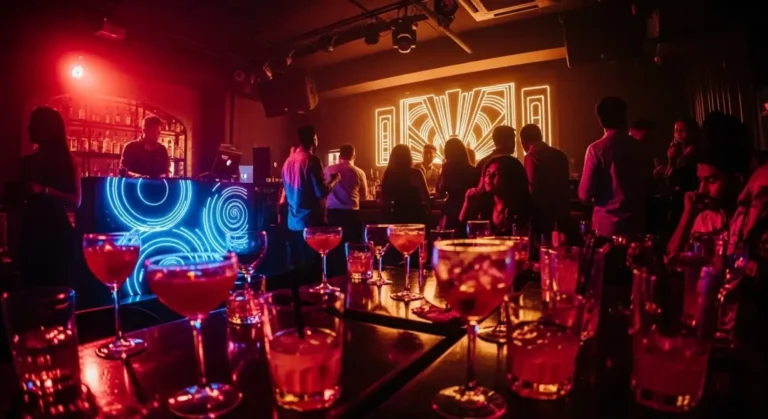
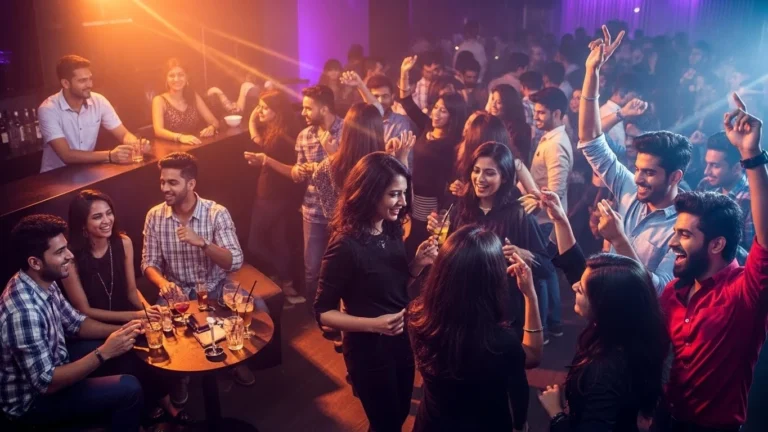
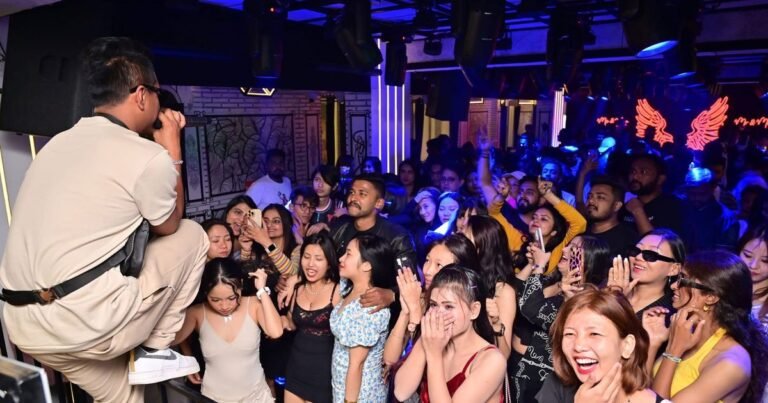
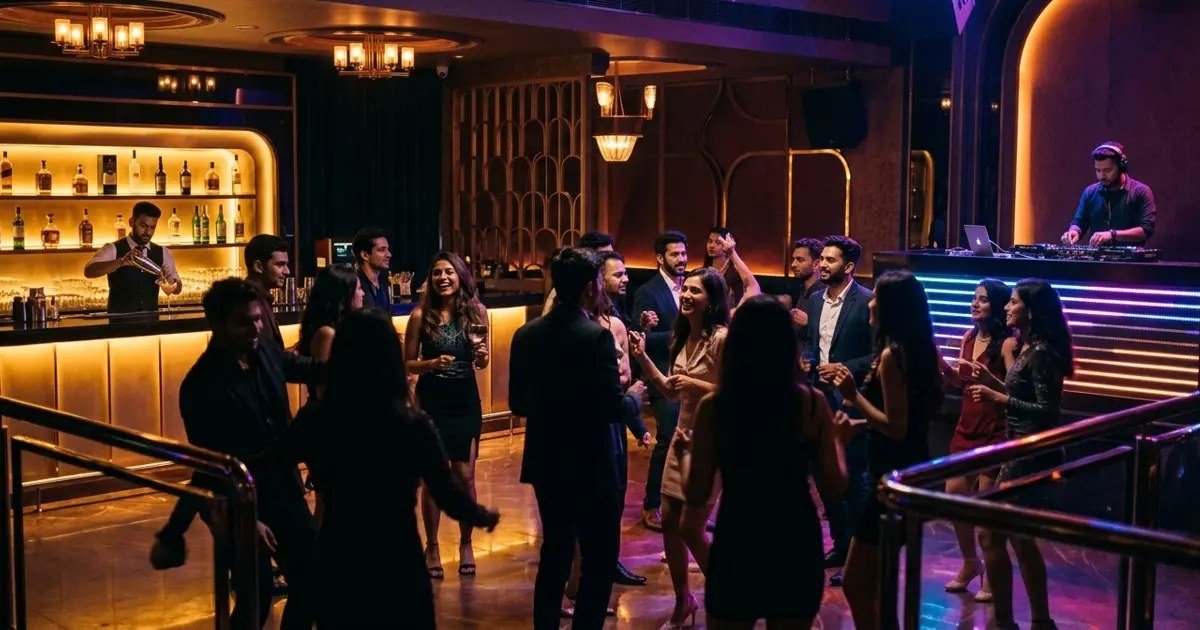
Late night rooms are music forward by design. Food is limited because the kitchen is not the point, the floor matters more than the seating, and the whole space is built to work between ten and one rather than across a full evening.
That makes arrival timing critical in a way it is not elsewhere. Walking into a late peak room at nine means standing in a half empty space for an hour, watching staff set up, and losing the energy you brought with you from wherever you were before.
Bengaluru venues generally stop serving around one, which compresses everything. A late night room has roughly three genuinely good hours, and a group that arrives at half past eleven gets ninety minutes of them. Arriving at ten is worth considerably more than it sounds.
Cover charges appear at the busiest rooms on the busiest nights and are usually redeemable against your bill rather than being a pure entry fee. Dress codes also tighten after ten, so the same door that waved people through at nine can turn a group away without any published policy having changed.
Identification is checked more consistently in these rooms than anywhere else on the strip. Original documents are expected. A photograph on a phone is refused often enough that planning around it is genuinely unwise, particularly with a group where one person always forgets.
The night clubs in MG Road guide covers what to expect at the door in detail, including how stag and couple policies are applied in practice and why arriving before ten removes almost all of that friction.
Sequencing an evening across two of them
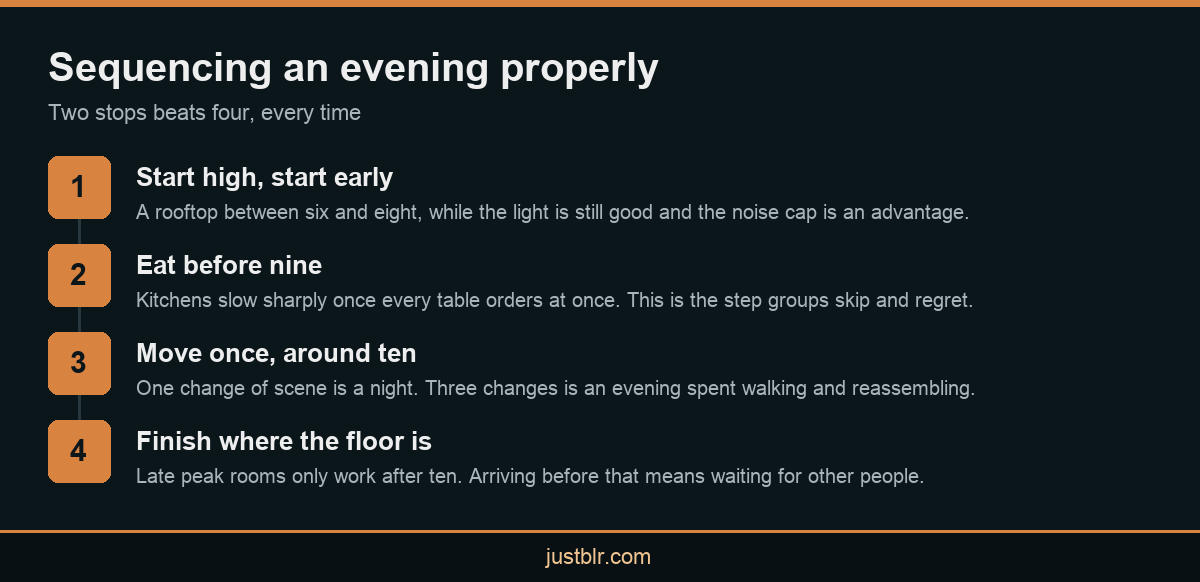
Most good nights in this area use two formats rather than one, and the sequence matters more than the specific rooms. Start high and early, eat before the kitchens slow down, move once around ten, and finish somewhere the floor actually fills.
Two stops is the sensible maximum. Every additional move costs roughly twenty minutes of reassembling a group, giving up a good table and persuading the two people who were comfortable that leaving is a good idea. Three moves turns an evening into a walking tour.
Eat properly at the second stop rather than picking at things across all of them. A group that has eaten drinks more slowly, stays considerably longer and leaves having spent less per hour than one that grazed and drank on an empty stomach from seven onwards.
Book the stop that matters. If the plan finishes on a floor, book the restobar. If the plan is dinner led, book that and walk in wherever you finish. Booking both is unnecessary and booking neither is how groups end up standing at half past nine.
Just BLR sits in Deena Complex on Brigade Road with three floors under one roof, which collapses this sequence into a single booking. The cocktail list and the kitchen run alongside a floor rather than instead of it, which is what lets one venue cover a whole evening.
Whatever the sequence, decide the exit at the start. The window between half past midnight and quarter past one is when the whole area tries to leave simultaneously, and a group that agreed a finishing time at nine simply walks out of it while everybody else waits.
Conclusion
The bars near MG Road are easy to enjoy and easy to get wrong, because the formats look similar from the street and behave completely differently once you are inside. Use a rooftop early, use a restobar for the body of the evening, and only head to a late night room after ten. Two stops, one booking, eat before nine and agree the exit. Reserve a table at Just BLR and let one building cover most of the night.