Work From Pub Bangalore: A Daytime Workspace Guide
A work from pub Bangalore day sounds like a novelty and is genuinely one of the better…
A work from pub Bangalore day sounds like a novelty and is genuinely one of the better remote work options in the
city, for one straightforward reason: space. A pub at two in the afternoon is a large quiet room full of tables built
for four and occupied by nobody. This guide covers how it compares with a cafe or a co-working desk, what to check
before committing a working day to one, and how to make the transition when the room turns in the evening.
Key Takeaways
-
A pub by day beats a cafe on space and noise and loses to
co-working on sockets and calls. Which matters most depends
entirely on your work. -
Ask about wifi speed rather than wifi availability, and ask which tables have power. Those two answers decide
whether a working day is possible at all. -
The real advantage is the transition. At six the room turns into an evening and you are already there with a table,
which no cafe or desk can offer.
Why a pub by day works better than it sounds
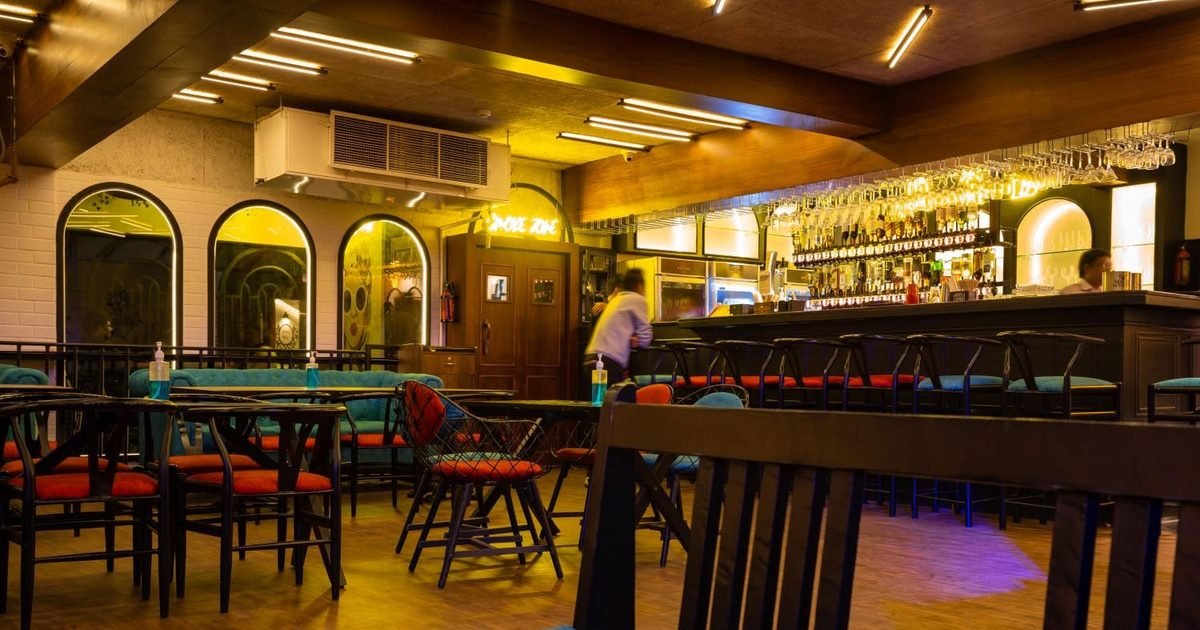
Space is the whole argument. A pub at two in the afternoon is a large room full of tables built for four people and
currently seating nobody, which means you get a genuine working surface rather than the corner of a cafe table you are
sharing with a stranger.
Noise is the second and it surprises people. Pubs by day are considerably quieter than cafes, because a cafe runs a
grinder, a steamer and a queue continuously while a pub in the afternoon is close to silent.
Nobody is waiting for your table. A cafe has a turnover model and a queue at the counter, which produces a quiet
pressure to leave that most people feel by the second hour. A pub in the afternoon has neither of those things, which
is why an afternoon there stretches comfortably into four hours without anybody noticing.
Seating is better designed for a long stay. Pub chairs and banquettes are built for people who will sit in them for
four hours, which is a genuinely different standard from cafe seating built for forty minutes and a pastry eaten
standing up.
Remote working has normalised all of this. A laptop in a pub at three in the afternoon is no longer unusual anywhere
in the city, and venues have noticed that an otherwise empty afternoon room can carry some trade.
The obvious limitation is that it is not an office. Video calls, confidential material and anything requiring a second
monitor are all better done elsewhere, and a pub afternoon suits focused solo work rather than collaboration or
anything that needs to be kept off a screen other people can see.
How it compares with the alternatives
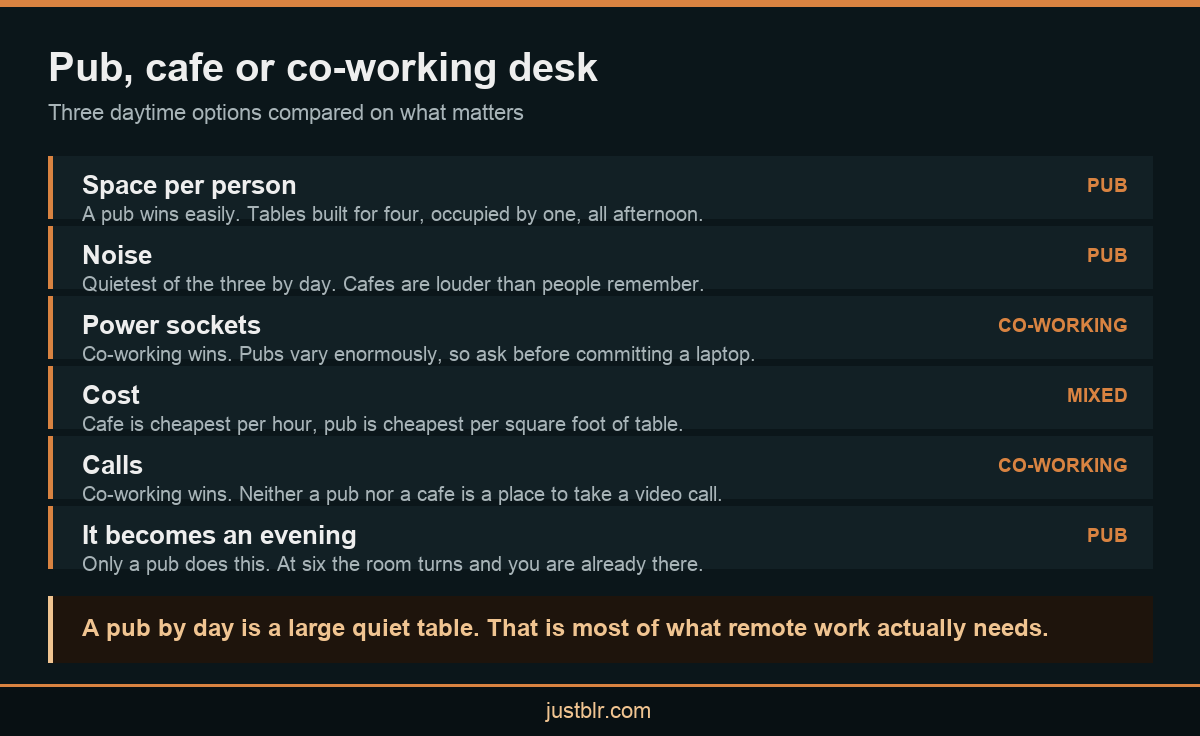
Against a cafe, a pub wins on space, noise and the absence of pressure to leave. A cafe wins on coffee quality, on
cost per hour and on being open earlier, which matters if your working day starts before midday.
Against a co-working desk, a pub loses on sockets, on reliable high speed connections and on anywhere appropriate to
take a call. Co-working exists precisely to solve those three problems and it solves them properly.
Where a pub wins outright is the flexibility. There is no membership, no booking, no monthly commitment and no
obligation to be there tomorrow, which suits anybody working from a venue two or three times a month rather than
daily.
Cost comparison depends entirely on how you count it. A cafe is cheapest per hour, a co-working desk is cheapest per
socket, and a pub is by some distance the cheapest per square foot of usable table anywhere in the city.
The unique advantage is the transition at six. A working afternoon that becomes an evening with colleagues requires no
travel, no second booking and no reassembling anybody, and neither a cafe nor a desk can offer that at all.
For groups who want to make that transition deliberately, the
corporate parties page covers how afternoon and early evening
bookings work for a team that would rather not go back to an office first, or travel across the city twice in one day.
What to check before committing a day
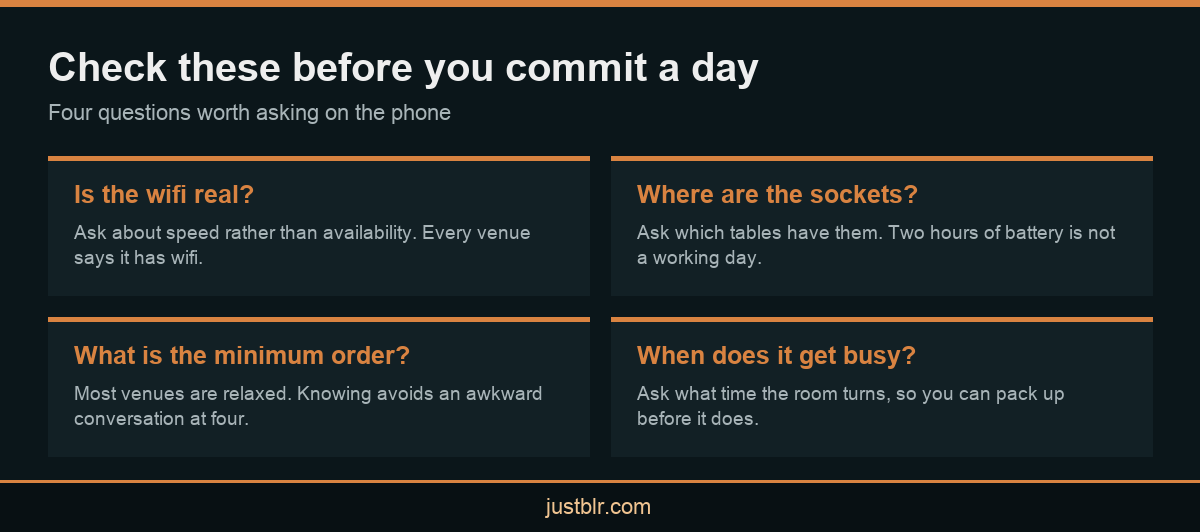
Ask about wifi speed rather than wifi availability. Every venue in
the city says it has wifi, and the useful question is whether it will carry a video call or only a browser, because
the answer varies enormously.
Ask which tables have power. Two hours of battery is not a working day, and sockets in a pub are usually clustered
along one wall rather than distributed evenly, which means the good working tables are a small subset of the room
rather than most of it, and they go to whoever arrives first in the afternoon.
Ask about the minimum order. Most venues are entirely relaxed about somebody working through an afternoon, but knowing
the expectation avoids an awkward conversation at four o’clock and lets you plan the day around it instead.
Ask what time the room turns. Knowing whether the music comes up at five or at seven decides when to pack up, and
being caught mid task while a room fills around you is the most common frustration with the whole approach.
Ask whether the kitchen runs all afternoon. A venue that serves food continuously is a much better working day than
one where lunch stops at three and nothing arrives again until seven, particularly across a full working afternoon
that runs from midday to six.
Go once and find out before relying on it. A single afternoon tells you more than any amount of asking, and the venues
that work well for this become genuinely useful once you have found one or two of them and stopped guessing. Two
reliable places is enough for anybody working outside an office a few times a month.
Working well, then staying on
Arrive early rather than at lunchtime. The best working tables, the ones near power and away from the door, go to
whoever gets there first, and by two in the afternoon somebody else is already sitting at the good one.
Order properly rather than nursing one coffee for five hours. It costs less than a co-working day pass, it makes the
arrangement work for the venue as well as for you, and it is the reason the arrangement continues to be tolerated at
all across most of the city.
Take calls outside. This is the one genuine obligation and the thing most likely to make a venue less welcoming to the
next person with a laptop. A pub is a shared room rather than a private office.
Pack up before the room turns. Being the person still typing at seven while a room fills around you is uncomfortable
for everybody, and knowing the hour in advance turns that into a clean finish rather than an awkward one.
Then stay if you want to. That is the actual advantage over every other option, because the room you worked in becomes
the room you are drinking in without a journey, a second booking or a conversation about where to go next.
Just BLR sits in Deena Complex on Brigade Road, a short walk from the metro, with three floors and a multi cuisine
kitchen. The contact page is the fastest way to confirm afternoon
availability, wifi and which tables have power before making the trip.
Conclusion
An afternoon working from a pub gives you a large quiet table with nobody waiting for it, which is most of what
focused remote work actually needs. Check the wifi speed, ask which tables have power, order properly and take calls
outside. Pack up before the room turns, and then stay if you feel like it, because that transition is the thing
nothing else offers. Reserve a table at Just BLR.